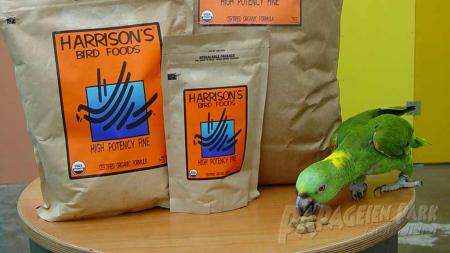
Ein Teil der Papageien nimmt das Dr. Harrisons Erhaltungs- oder Zuchtfutter spontan auf. In solchen Fällen wird das bisherige Futter einfach entfernt und nicht mehr angeboten.
Bei der Mehrheit der Papageien und Sittiche kann es jedoch mehrere Wochen dauern, bis sich die Vögel auf das neue Futter in der ungewohnten Form umstellen. In diesem Fall gehen Sie bitte so vor:
- Sie sollten das bisherige Futter - ohne Nüsse jeglicher Art - in stark reduzierter Menge... >> Amazone/Graupapagei ca. 1 gehäufter Eßlöffel pro Tag / >> große Kakadus und Aras ca. 2 gehäufte Eßlöffel pro Tag angeboten werden, wobei es vermischt wird mit teilweise leicht zerkleinertem Dr. Harrisons Umstellungsfutter. Das bisherige Körnerfutter soll nur einen Teil des Grundbedarfs decken. Leichter Hunger bewegt die Tiere zum Probieren des neuen Futters.
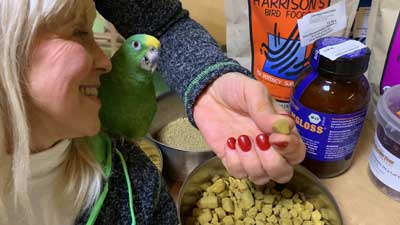
- Als zusätzliche Hilfe können Sie selbst im Beisein Ihres Vogels ein paar Bröckchen des Umstellungsfutters "zur Demonstration" essen, denn der Futterneid ist bei vielen Vögeln sehr hilfreich beim Ausprobieren von neuen Futtersorten.
- Obst- und Gemüsestücke dürfen in der Umstellungsphase unlimitiert angeboten werden. Diese sollten jedoch nicht länger als 3 Stunden im Futternapf bleiben (Infektionsgefahr für Ihren Vogel). Das Dr. Harrisons Umstellungsfutter kann während dieser Phase auch eingeweicht mit Wasser oder Fruchtsaft angeboten werden.
Mit steigender Akzeptanz (1. bis 2. Umstellungswoche) wird die Menge des bisherigen Körnerfutters kontinuierlich reduziert. - Sobald Ihr Vogel keine Körner mehr frißt, d.h. er ernährt sich von dem Umstellungsfutter, Obst und Gemüse, können Sie auf die gleiche Weise das Umstellungsfutter durch das Dr. Harrisons Zuchtfutter ersetzen. Bei kranken Tieren empfiehlt es sich, den Vogel für mindestens 6 - 12 Monate auf dieser Stufe zu belassen. Gesunde Papageien, die nicht brüten, oder verfettete Papageien (vgl. Futterbeschreibung) werden nach Akzeptanz des Zuchtfutters analog auf das Dr. Harrisons Erhaltungsfutter umgestellt.
- Kleinere Papageien und Sittiche sollen täglich ca. 10 % ihres Körpergewichts von dem entsprechenden Dr. Harrisons Alleinfutter sowie 1 - 2 Teelöffel Obst und Gemüse erhalten. verteilt auf 2 Mahlzeiten.
Mittelgroße Papageien und Sittiche erhalten 8 - 10 % ihre Körpergewichts an Futter und 1 - 2 Eßlöffel Obst und Gemüse. - Große Papageien sollten 8 % ihres Körpergewichts als Dr. Harrisons Alleinfutter und 3 - 4 Eßlöffel Obst und Gemüse aufnehmen.
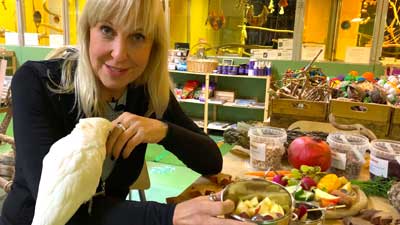
- Verschiedene Obst- und Gemüsesorten sollten am besten kleingehackt, in einer separaten Schüssel parallel zum Dr. Harrisons Alleinfutter angeboten werden. Zu empfehlen sind: Karotten, Paprika, Peperoni, Tomaten, Spinat, Endiviensalat, Gurken, Zucchini, Radieschen, Mais, Petersilie, Erdbeeren, Ebereschen, Äpfel, Birnen, Kirschen, Pflaumen, Pfirsiche, Kiwi, Bananen, Papaya, Orangen, Mandarinen oder Weintrauben ( bei Obstsorten sind Kerne bzw. Steine vor der Verfütterung zu entfernen). Avocado darf auf keinen Fall verfüttert werden, da sie für die meisten Papageien giftig ist!
- Verabreichung von zusätzlichen Multivitaminpräparaten oder Mineralien über Trinkwasser oder Futter sollte unterbleiben, da das Dr. Harrisons Alleinfutter voll vitaminisiert und mineralisiert ist.
Bieten Sie das Alleinfutter nur in solchen Mengen pro Tag an, die auch komplett verzehrt werden ( 2 - 3 Bröckchen dürfen durchaus übrigbleiben). Wenn sich zuviel Futter in den Näpfen befindet, neigen manche Papageien zur Verschwendung und werfen einen Teil auf den Volieren- oder Käfigboden. von dem sie es aus gegebenen Gründen nicht wieder aufnehmen sollten. - Bei über 36 Stunden andauernden Problemen in der Umstellungsphase wie z.B. Veränderungen des Kots (außer Farbverschiebung in grünlich-bräunlich), oder wenn der Vogel apathisch wird, sein Gefieder aufplustert oder ständig nach Futter sucht, bieten Sie das gewohnte Futter an und konsultieren Sie bitte den Papageienpark Bochum oder Ihren auf Vogelkrankheiten spezialisierten Tierarzt .
- Geschaft: herzlichen Glückwunsch - Ihr Vogel wird es Ihnen danken.
Dr. Harrisons Alleinfutter wird oft auch verkürzt als Harrison Futter bezeichnet.
Für Rückfragen steht Ihnen der Papageienpark Bochum gerne zur Verfügung...
Tipp: Videos zum Thema ansehen
Zur gesunden Papageien-Ernährung...


